


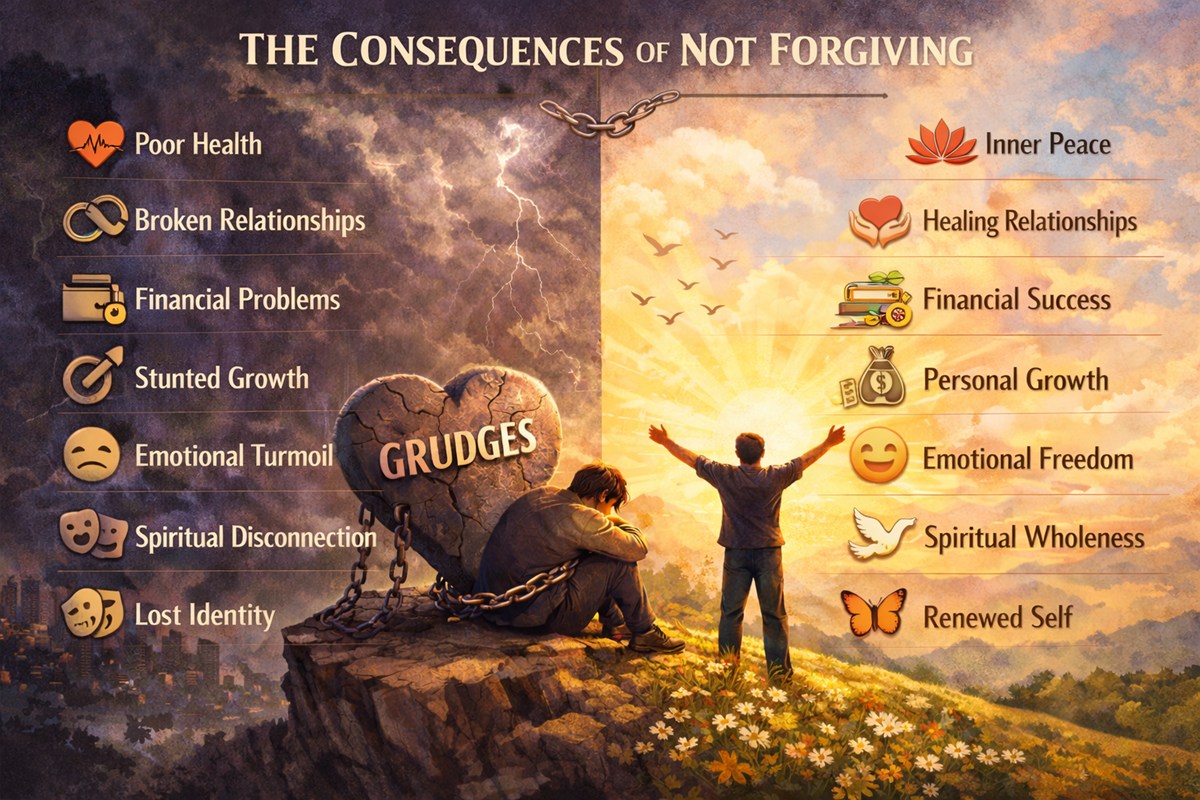
The Consequences of Not Forgiving
Forgiveness is one of those ideas most of us agree with in theory but struggle with in practice. When someone hurts us deeply, forgiveness can feel unfair, premature, or even impossible. Holding onto resentment can seem like a form of self-protection or justice. Yet over time, not forgiving often ends up costing us far more than the person who caused the pain.
Not forgiving doesn’t just affect one part of life. Its impact quietly spreads into our health, relationships, finances, personal growth, and even our spiritual well-being. Let’s explore how unresolved resentment can shape our lives—and why forgiveness, while difficult, can be profoundly freeing.
-
Health: When Emotional Pain Becomes Physical
One of the most immediate consequences of not forgiving shows up in our bodies. Holding onto anger, bitterness, or resentment keeps the nervous system in a constant state of stress. The body doesn’t distinguish much between emotional threats and physical ones—it reacts the same way.
Chronic stress from unresolved hurt has been linked to headaches, high blood pressure, digestive issues, weakened immunity, and sleep problems. People who carry long-term resentment often report feeling tense, fatigued, or “on edge” without fully realizing why.
Forgiveness doesn’t erase the past, but it allows the body to finally stand down from battle. Letting go of emotional grudges often brings a surprising sense of physical relief—lighter breathing, better sleep, and a calmer baseline state.
-
Relationships: The Ripple Effect of Unforgiveness
Unforgiveness rarely stays contained to the original relationship. Even when resentment is directed at one person, it tends to spill over into others.
People who haven’t forgiven often become guarded, suspicious, or emotionally distant. Trust becomes harder. Small conflicts feel bigger. There may be an unconscious expectation that others will disappoint or betray us the same way.
This can strain romantic relationships, friendships, family connections, and even work interactions. Over time, unresolved hurt can lead to isolation—not because others are unworthy, but because emotional walls have grown too high.
Forgiveness doesn’t mean reconnecting with unsafe people. It means freeing future relationships from the shadow of past wounds.
-
Finances: Emotional Baggage Has a Price Tag
At first glance, forgiveness and finances may seem unrelated—but emotional states strongly influence money decisions.
When resentment lingers, it can fuel impulsive spending, avoidance of responsibility, or self-sabotage. Some people overspend to numb emotional pain, while others avoid financial planning altogether because they feel undeserving of success or stability.
In business or career settings, unforgiveness can block opportunities. Refusing to collaborate, holding grudges against colleagues, or staying stuck in anger toward a former employer can quietly limit growth and income.
Forgiveness often restores clarity. When emotional energy is no longer tied up in past conflicts, people make calmer, more strategic financial decisions.
-
Personal Development: Growth Stalls Where Resentment Lives
Personal growth requires reflection, humility, and openness. Unforgiveness, however, locks us into a rigid emotional posture—focused on what was done to us rather than what we can learn or become.
When we refuse to forgive, we often replay the same story over and over. The narrative stays frozen in time, and so do we. Growth slows because energy is spent rehearsing old pain instead of building new skills, goals, or perspectives.
Forgiveness doesn’t excuse wrongdoing; it reclaims ownership of your future. It allows personal development to resume, unburdened by constant emotional weight.
-
Mental and Emotional Well-Being: The Weight of Carrying Grudges
Unforgiveness keeps the mind busy in unhealthy ways. Rumination, replaying conversations, imagining confrontations, and reliving emotional injuries become mental habits.
This mental loop fuels anxiety, irritability, and sometimes depression. It narrows emotional bandwidth, leaving less space for joy, creativity, and curiosity. Even positive experiences can feel muted when unresolved anger is always humming in the background.
Forgiveness interrupts this loop. It doesn’t mean forgetting—it means choosing peace over constant mental conflict.
-
Spirituality: Disconnection From Meaning and Peace
For many people, forgiveness is deeply tied to spirituality or a sense of higher meaning. When forgiveness is withheld, there’s often a subtle feeling of inner dissonance—a sense of being out of alignment with one’s values.
Unforgiveness can harden the heart, making compassion feel risky and humility feel threatening. Over time, this can lead to spiritual dryness, cynicism, or loss of purpose.
Forgiveness often restores a sense of connection—to oneself, to others, and to something larger than personal pain. It softens the inner landscape and invites peace where bitterness once lived.
-
Identity: Becoming Defined by the Wound
One of the most overlooked consequences of not forgiving is how it shapes identity. When pain goes unresolved, it can quietly become part of how we see ourselves.
We may begin to identify as “the one who was wronged,” “the betrayed one,” or “the victim.” While these experiences are real and valid, staying there too long allows the wound to define us.
Forgiveness allows the story to evolve. The pain becomes a chapter, not the title of the book.
Forgiveness Is a Process, Not a Demand
It’s important to say this clearly: forgiveness is not forced positivity, denial, or reconciliation at all costs. It doesn’t mean excusing abuse, pretending nothing happened, or inviting harm back into your life.
Forgiveness is a process. Sometimes it happens in layers. Sometimes it takes time, support, and boundaries. And sometimes it begins simply with the decision to stop letting the past control the present.
Final Thoughts
Not forgiving can feel powerful in the short term, but over time it becomes a heavy burden. It affects health, relationships, finances, growth, emotional peace, and spiritual well-being – often in quiet but persistent ways.
Forgiveness isn’t about letting others off the hook. It’s about releasing yourself from a prison built by unresolved pain. When forgiveness enters, space opens—for healing, clarity, growth, and peace.
And that space is where life begins to feel lighter again.
Thank you for reading “The Consequences of Not Forgiving” – Please Click Here to Return to the Home page