
Being forgiven can be a deeply moving and humbling experience. Whether the forgiveness comes after a misunderstanding, a serious mistake, or a long period of hurt, how you respond in that moment matters. Your response can either strengthen trust and healing—or unintentionally reopen wounds. Forgiveness is not a finish line; it is an invitation to grow, repair, and change.
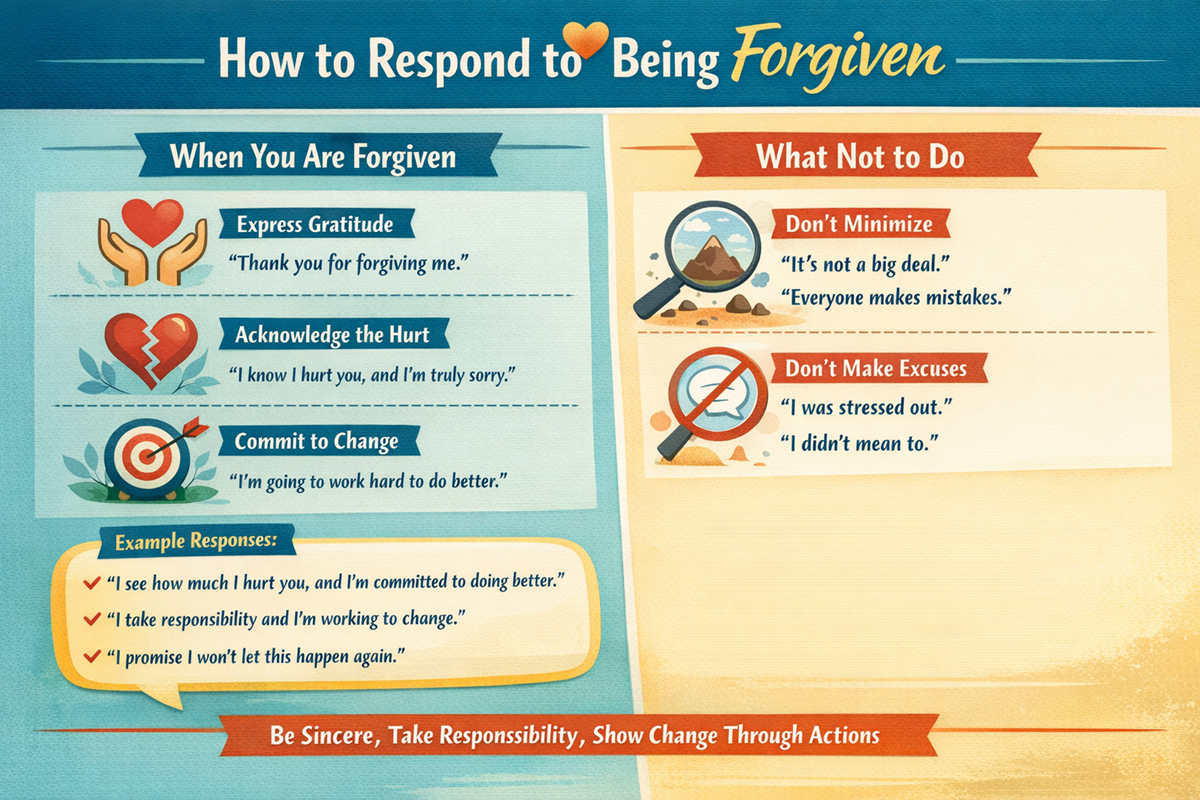
Responding well to forgiveness involves three core elements: expressing gratitude, acknowledging the hurt you caused, and committing to changed behaviour in the future. It also requires restraint—knowing what not to say or do. This article explores both sides, offering guidance and examples to help you respond with sincerity, maturity, and respect.
- Expressing Gratitude for Forgiveness
Forgiveness is a gift, not an obligation. When someone forgives you, they are choosing emotional generosity, often at personal cost. The first and most essential response is gratitude.
Expressing gratitude does not mean celebrating or feeling relieved too quickly; it means recognizing the courage and effort it took for the other person to forgive. Your tone should be calm, sincere, and focused on them, not on how much better you now feel.
Gratitude reassures the person that their forgiveness is valued and not taken lightly. A simple, heartfelt “thank you” can go a long way—especially when it is not rushed or followed immediately by justification.
- Acknowledging the Hurt You Caused
Forgiveness does not erase harm. A crucial part of responding well is showing that you truly understand what you did and how it affected the other person.
Acknowledging the hurt means:
- Naming the behaviour without softening it
- Recognizing the emotional or practical impact
- Avoiding defensiveness or self-pity
This step shows empathy and accountability. It communicates that you are not just grateful to be forgiven, but also aware of why forgiveness was needed in the first place. Without this acknowledgment, forgiveness can feel hollow or premature.
Importantly, acknowledgment is not about rehashing the event in detail or asking for reassurance. It is about demonstrating understanding and respect for the other person’s experience.
- Committing to Changed Behaviour in the Future
Words alone are not enough. Forgiveness opens the door to trust, but trust is rebuilt through consistent action. When you are forgiven, it is appropriate—and often necessary—to express a commitment to change.
This commitment should be:
- Specific rather than vague
- Forward-looking rather than self-focused
- Realistic and actionable
You are not promising perfection, but you are promising effort, awareness, and accountability. This helps the other person feel safer and reassured that their forgiveness is not being wasted.
How to Respond to Being Forgiven: Examples of What to Say When You Are Forgiven
Here are four examples that combine gratitude, acknowledgment, and commitment:
- “Thank you for forgiving me. I know that my actions hurt you, and I’m truly sorry for that. I’m committed to being more thoughtful and making sure this doesn’t happen again.”
- “I really appreciate your forgiveness. I understand now how my behaviour affected you, and I take responsibility for it. I’m actively working on changing how I handle situations like this.”
- “Your forgiveness means a lot to me. I see how much pain I caused, and I don’t take this lightly. I want you to know I’m committed to doing better moving forward.”
- “Thank you for giving me another chance. I know I broke your trust, and I regret that deeply. I’m taking concrete steps to change so my actions match my words.”
Each of these responses avoids defensiveness and centers on responsibility and growth.
What Not to Do When You Are Forgiven
Just as important as what you should say is what you must avoid. Certain responses can undermine forgiveness and make the other person feel dismissed or invalidated.
a) Minimizing the Act
Minimizing happens when you downplay the seriousness of what you did, even unintentionally. Statements like:
“It wasn’t that big of a deal.”
“At least it wasn’t worse.”
“Everyone makes mistakes like this.”
These responses shift focus away from the harm and suggests that the person’s pain was an overreaction. Even if forgiveness has been offered, minimizing the act can reopen wounds and damage trust.
b) Making Excuses for Your Behaviour
Excuses often sound like explanations, but they function as defences:
“I was stressed.”
“I didn’t mean to.”
“That’s just how I am.”
While context may be discussed later, the moment of forgiveness is not the time to justify yourself. Excuses dilute accountability and can make forgiveness feel conditional or pressured.
Closing Thoughts
Being forgiven is both a relief and a responsibility. How you respond sets the tone for healing and future trust. By expressing sincere gratitude, fully acknowledging the hurt you caused, and committing to meaningful change, you honor the forgiveness you have been given.
Equally, by avoiding minimization and excuses, you show respect for the pain that preceded forgiveness. When handled with humility and care, responding well to forgiveness can transform a painful moment into a foundation for deeper understanding, stronger relationships, and personal growth.
Thank you for reading our How to Respond to Being Forgiven article.