
Grace Without Enabling: Forgiveness and Healthy Boundaries in Christian Life

Forgiveness is one of the most beautiful and misunderstood parts of the Christian life.
Most of us grew up hearing some version of this: “You have to forgive.” And that’s true. Jesus speaks clearly about forgiveness. We pray it every time we say the Lord’s Prayer. It sits at the very center of the gospel.
But somewhere along the way, many Christians absorbed a second message that doesn’t actually come from Scripture:
If you really forgive someone, you don’t set limits.
If you really love someone, you keep giving them access.
If you’re truly gracious, you tolerate the behavior.
That’s where things get tangled.
Because grace is not the same thing as enabling. And forgiveness does not mean the absence of boundaries.
Let’s talk about what it looks like to live with both.
Forgiveness and Healthy Boundaries in Christian Life: What Forgiveness Actually Means
In the Christian sense, forgiveness is about releasing someone from the debt they owe you. It’s a decision to free yourself by letting go of revenge, bitterness, and the desire to punish. It’s placing justice back into God’s hands instead of trying to carry it yourself.
Forgiveness is primarily about your heart before God.
It is not:
- Pretending it didn’t hurt
- Minimizing sin
- Calling abuse “miscommunication”
- Restoring trust automatically
- Re-entering unsafe situations
Forgiveness deals with resentment.
Boundaries deal with wisdom.
Those are two different issues.
Jesus Modeled Grace — And Boundaries
Sometimes we picture Jesus as endlessly accessible, endlessly accommodating, never saying no. But when you look closely at the Gospels, you see something different.
Jesus forgave freely. But He did not entrust Himself to everyone.
In John 2:24, we’re told that Jesus “did not entrust Himself to them, because He knew all people.” That’s a boundary. He loved people deeply, but He did not give everyone equal access to Himself.
He also:
- Walked away from crowds when He needed rest
- Confronted hypocrisy directly
- Refused to perform signs on demand
- Allowed natural consequences to stand
Grace did not mean unlimited tolerance.
That matters.
The Confusion Between Grace and Enabling
Enabling happens when we remove consequences that might otherwise motivate change. It often looks compassionate on the surface, but it quietly protects destructive behavior.
In Christian circles, enabling can sound spiritual:
- “That’s just how they are.”
- “We all fall short.”
- “I need to be more loving.”
- “God forgives me, so who am I to say anything?”
Those statements contain truth — but truth taken out of balance can become harm.
Grace says: I release you to God.
Enabling says: I will shield you from the impact of your choices.
Grace leaves room for repentance.
Enabling often delays it.
Forgiveness Does Not Automatically Restore Trust
This is one of the biggest misunderstandings in Christian relationships.
Forgiveness is a decision.
Trust is built over time.
If someone lies repeatedly, forgiveness means you’re not seeking revenge. It does not mean you immediately hand them access to your private information again.
If someone betrays you, forgiveness releases bitterness. It does not require instant reconciliation.
Trust grows when there is:
- Repentance
- Accountability
- Consistent changed behavior
- Time
Scripture supports this distinction. When Zacchaeus encountered Jesus, he didn’t just say sorry. He made restitution. Repentance produced fruit.
Healthy boundaries simply wait for fruit.
When Boundaries Are Especially Necessary
Some situations call for especially clear limits.
- Patterns of Repeated Harm
If someone repeatedly violates your trust without change, boundaries protect both you and the integrity of the relationship.
- Emotional or Verbal Abuse
Forgiveness does not require you to remain in conversations where you are demeaned or manipulated.
You can forgive someone and still say:
“I won’t continue this conversation if you speak to me that way.”
- Addiction or Destructive Behavior
Shielding someone from consequences often prolongs the cycle. Boundaries allow reality to do its work.
- Family Dynamics
In Christian families especially, guilt can be powerful. But honoring your parents or loving siblings does not mean tolerating ongoing harm.
Forgiveness and distance can coexist.
The Fear Behind Boundary-Setting
Many believers hesitate to set boundaries because they fear:
- Being unloving
- Appearing prideful
- Disobeying God
- “Hardening their heart”
But boundaries are not walls of bitterness. They are gates of wisdom.
You can have a soft heart and firm limits at the same time.
Think of it this way: God Himself sets boundaries. Scripture is full of them. Commands, consequences, structure — these are not unloving. They are protective.
If boundaries were unspiritual, God would not use them.
Forgiveness and Healthy Boundaries in Christian Life: What Healthy Boundaries Sound Like
Boundaries don’t require drama or ultimatums. Often they’re simple and calm.
They might sound like:
- “I’m willing to talk, but not if voices are raised.”
- “I forgive you, but rebuilding trust will take time.”
- “I can’t lend money again right now.”
- “I won’t participate in gossip.”
- “I need space for a while.”
Notice something important: boundaries are about what you will do, not about controlling the other person.
You are responsible for your obedience and safety.
You are not responsible for managing someone else’s emotions.
Forgiveness Without Forgetting
There’s an old phrase: “forgive and forget.” It sounds holy. But it’s not actually biblical language.
God says He remembers our sins no more — but God is omniscient. He doesn’t develop amnesia. The phrase describes His choice not to hold sin against us.
In human relationships, memory serves wisdom.
If someone has a history of betrayal, remembering that history helps you move forward carefully. Forgetting would not be virtuous. It would be naive.
Forgiveness releases revenge.
Memory informs boundaries.
Those two things can live together.
What About Reconciliation?
Reconciliation is beautiful. It reflects the heart of the gospel. But it requires two willing participants.
Forgiveness is unilateral. You can forgive even if the other person never apologizes.
Reconciliation is mutual. It requires repentance, humility, and effort from both sides.
Sometimes reconciliation is possible and healing. Sometimes it’s unsafe or unwise. And sometimes it’s simply not available.
You can obey God fully in forgiveness even if reconciliation never happens.
Grace Does Not Cancel Justice
Another misconception is that grace and justice are opposites. But in Scripture, they meet at the cross.
Grace doesn’t pretend sin isn’t serious. It acknowledges the full weight of it.
In everyday life, this means:
- You can forgive someone and still involve appropriate authority if laws were broken.
- You can forgive and still insist on counseling before restoring intimacy.
- You can forgive and still step away from leadership positions where trust was violated.
Forgiveness addresses your heart.
Justice addresses behavior.
Both matter.
A Gentle Self-Check
If you’re unsure whether you’re practicing grace or enabling, ask yourself:
- Am I protecting this person from consequences that might lead to growth?
- Am I afraid to set limits because I fear their reaction?
- Is this pattern improving, or just repeating?
- Would I advise a friend to stay in this exact situation?
Honest answers bring clarity.
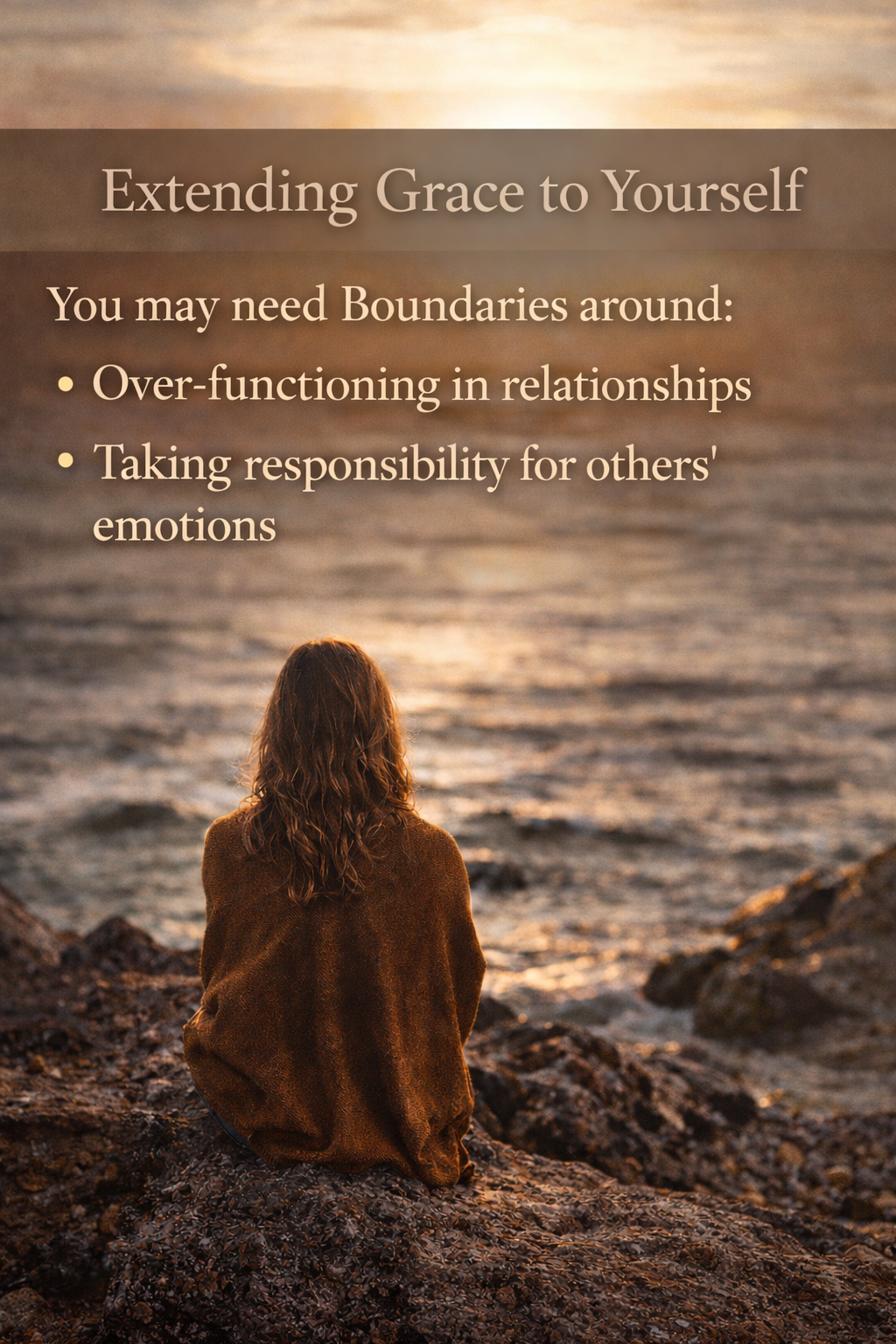
Extending Grace to Yourself
 Sometimes the hardest boundaries to set are the ones we need for ourselves.
You may need boundaries around:
- Over-functioning in relationships
- Taking responsibility for others’ emotions
- Saying yes when you mean no
- Absorbing guilt that isn’t yours
Self-sacrifice is central to the Christian life — but self-erasure is not.
Jesus laid down His life willingly. It was not taken from Him through manipulation.
There’s a difference.
The Heart Posture That Matters Most
Boundaries can be set in anger or in peace. Forgiveness can be declared outwardly while resentment still simmers underneath.
The goal isn’t just external behavior. It’s a heart aligned with Christ.
Grace without enabling looks like this:
- You genuinely release bitterness.
- You pray for the person’s good.
- You refuse revenge.
- And you still require accountability.
It’s strength under control. Compassion with clarity. Love guided by wisdom.
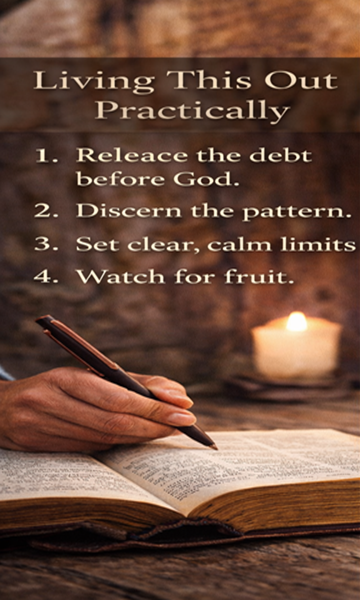 Living This Out Practically
Here’s a simple framework:
- Release the debt before God.
Tell Him honestly what it cost you. Then surrender your right to revenge. - Discern the pattern.
Is this a one-time failure or ongoing behavior? - Set clear, calm limits.
Decide what access or trust level is wise. - Watch for fruit.
Repentance produces change over time. - Keep your heart soft.
Boundaries protect your peace, not your pride.
A Final Word of Encouragement
If you’ve been told that “real Christians don’t need boundaries,” I want to gently say: that’s not biblical. It’s cultural.
Grace is powerful. Forgiveness is transformative. But neither requires you to ignore wisdom.
You can love deeply and still say no.
You can forgive fully and still step back.
You can extend grace and still allow consequences.
That isn’t a lack of faith. It’s maturity.
And sometimes the most Christlike thing you can do is offer grace — without enabling — and trust God to do the transforming work that only He can do.
Thank you for reading this Article on Forgiveness and Healthy Boundaries in Christian Life.
Please Click Here to Return to Learning To Forgive Home Page