
Forgiveness is one of those words that carries a lot of weight.
For some people, it feels peaceful and empowering. For others, it feels unfair — like letting someone off the hook. And for many, it feels confusing. Does forgiveness mean forgetting? Does it mean trusting again? Does it mean pretending it didn’t hurt?
Psychology has spent the last few decades studying forgiveness in a serious, scientific way. And what researchers have found is both encouraging and clarifying:
Forgiveness is not weakness.
It’s not denial.
And it’s not about excusing bad behaviour.
It’s about emotional freedom.
Let’s unpack what Understanding Forgiveness really means.
What Psychologists Mean by “Forgiveness”
In psychology, forgiveness is usually defined as a conscious, intentional decision to release feelings of resentment or vengeance toward someone who has hurt you — whether or not they deserve it.
Notice what’s in that definition:
- It’s a decision.
- It involves emotions.
- It does not depend on the other person apologizing.
- It doesn’t require reconciliation.
Forgiveness is about what happens inside you.
Researchers like Dr. Robert Enright and Dr. Everett Worthington — two of the pioneers in forgiveness research — have consistently emphasized that forgiveness is a process. It’s not a single moment of saying, “I’m over it.” It often unfolds over time.
That alone relieves some pressure.
You don’t have to flip a switch. You move through it.
Understanding Forgiveness: What Happens in the Brain When We Hold Onto Resentment
When you replay an offense in your mind — especially with anger — your brain reacts as if the threat is happening again.
The stress response kicks in:
- Heart rate increases
- Blood pressure rises
- Stress hormones like cortisol are released
- Muscles tense
Your body doesn’t always distinguish between past and present when you ruminate.
Over time, chronic resentment can keep your nervous system in a low-level state of activation. It’s like leaving an engine idling all day long. Eventually, it wears things down.
Studies have linked prolonged anger and hostility to:
- Higher risk of cardiovascular disease
- Increased anxiety and depression
- Sleep disturbances
- Weakened immune function
This doesn’t mean anger is bad. Anger is a normal, healthy response to injustice. But staying stuck in chronic resentment can take a toll.
Forgiveness interrupts that cycle.
What Research Shows About Emotional Health
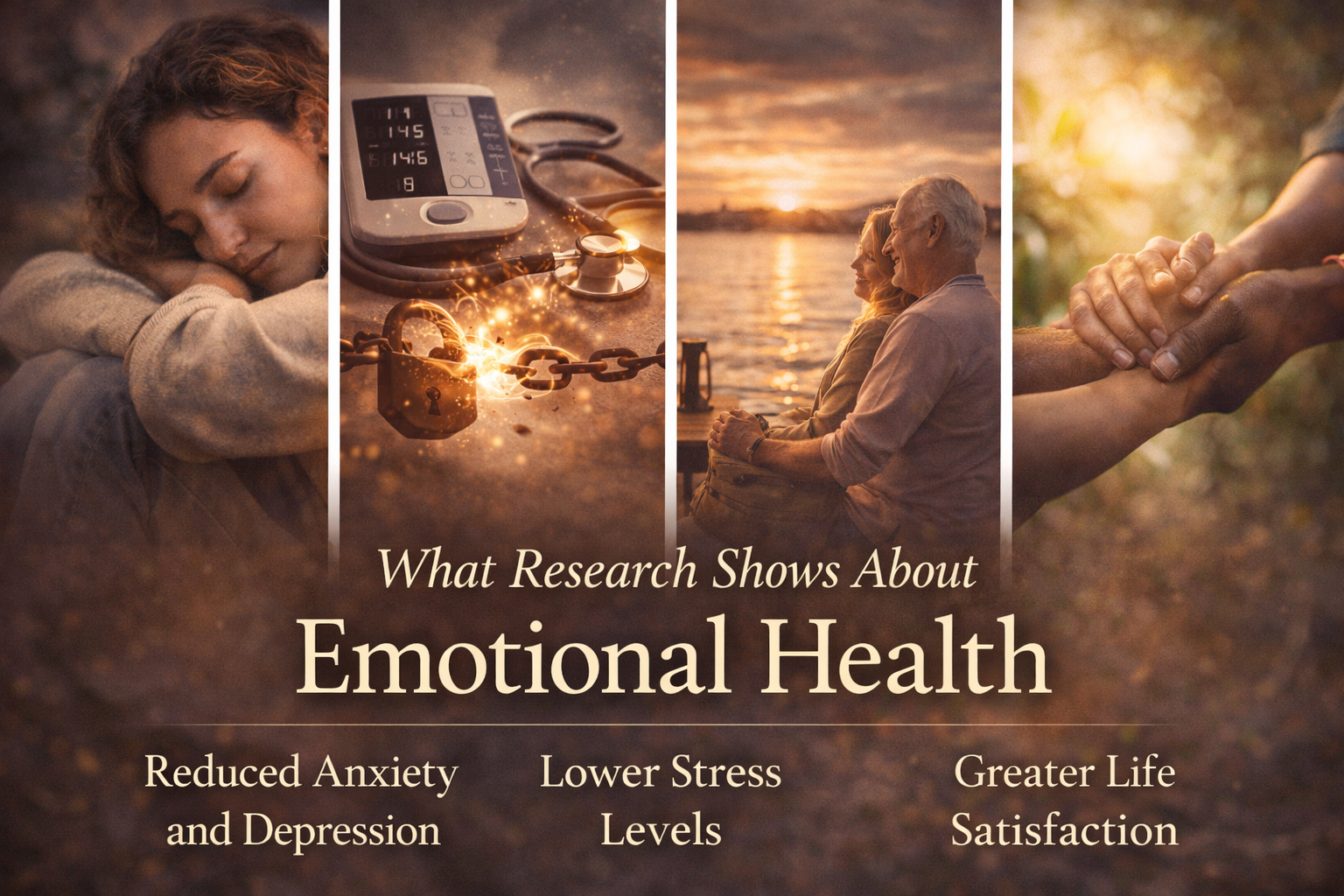
Over the past 30 years, dozens of studies have examined the mental health effects of forgiveness.
Here’s what keeps showing up about Understanding Forgiveness:
- Reduced Anxiety and Depression
People who practice forgiveness tend to report lower levels of anxiety and depression. Letting go of ongoing resentment reduces emotional rumination — and rumination is one of the strongest predictors of depression.
- Lower Stress Levels
Forgiveness interventions (structured programs designed to help people forgive) have been shown to reduce stress markers, including blood pressure and heart rate.
- Greater Life Satisfaction
People who score higher on measures of forgiveness often report greater overall well-being and satisfaction with life.
- Improved Relationships
When forgiveness is paired with healthy boundaries, it can increase relationship stability and trust over time.
Forgiveness isn’t just moral language. It’s measurable.
Forgiveness Is Not the Same as Reconciliation
Psychology draws a clear distinction here, and this is important.
Forgiveness is internal.
Reconciliation is relational.
You can forgive someone who never apologizes. You can forgive someone you never speak to again. You can forgive someone who has passed away.
Reconciliation requires:
- Safety
- Trust
- Mutual effort
- Accountability
Research supports this separation because confusing the two often prevents people from even attempting forgiveness. Many people assume that if they forgive, they must restore the relationship — even if it’s unsafe.
That’s not what the research says.
Forgiveness is about freeing yourself from carrying the emotional burden of the offence.
Emotional Freedom: What That Actually Means
When researchers talk about “emotional freedom,” they’re not suggesting that you’ll never feel anger again.
Emotional freedom means:
- You’re no longer controlled by the offence.
- It doesn’t dominate your thoughts daily.
- You can remember what happened without intense emotional spikes.
- Your sense of identity isn’t anchored to the wound.
You’re not pretending it didn’t hurt. You’re just no longer reliving it over and over.
That shift is powerful.
The Process of Forgiveness (According to Research)
Forgiveness usually unfolds in stages.
While different researchers describe the process differently, many models include something like this:
- Acknowledging the Hurt
You can’t forgive what you minimize. Healthy forgiveness starts with naming the injury honestly.
- Choosing to Forgive
This is the turning point. It’s the decision to stop pursuing revenge — even if emotions haven’t caught up yet.
- Working Through the Emotions
This stage often involves empathy — not to excuse behaviour, but to understand complexity. Research shows that perspective-taking can reduce anger intensity.
- Finding Meaning
Many people eventually integrate the experience into their life story in a way that fosters growth.
That last stage is sometimes called “post-traumatic growth.” It doesn’t mean the harm was good. It means something constructive emerged from it.
What About Severe Hurt or Trauma?
Here’s where nuance matters.
Research consistently shows that forgiveness can be healing — but it must never be rushed or forced.
In cases of trauma or abuse, safety and stabilization come first. Forgiveness is not a shortcut to healing. It’s often something that becomes possible later, after processing the pain.
Some studies on trauma survivors show that forgiveness interventions can reduce PTSD symptoms — but only when participants are ready and not pressured.
Pressure undermines healing.
Healthy forgiveness is voluntary.
Understanding Forgiveness: The Role of Empathy in Forgiveness
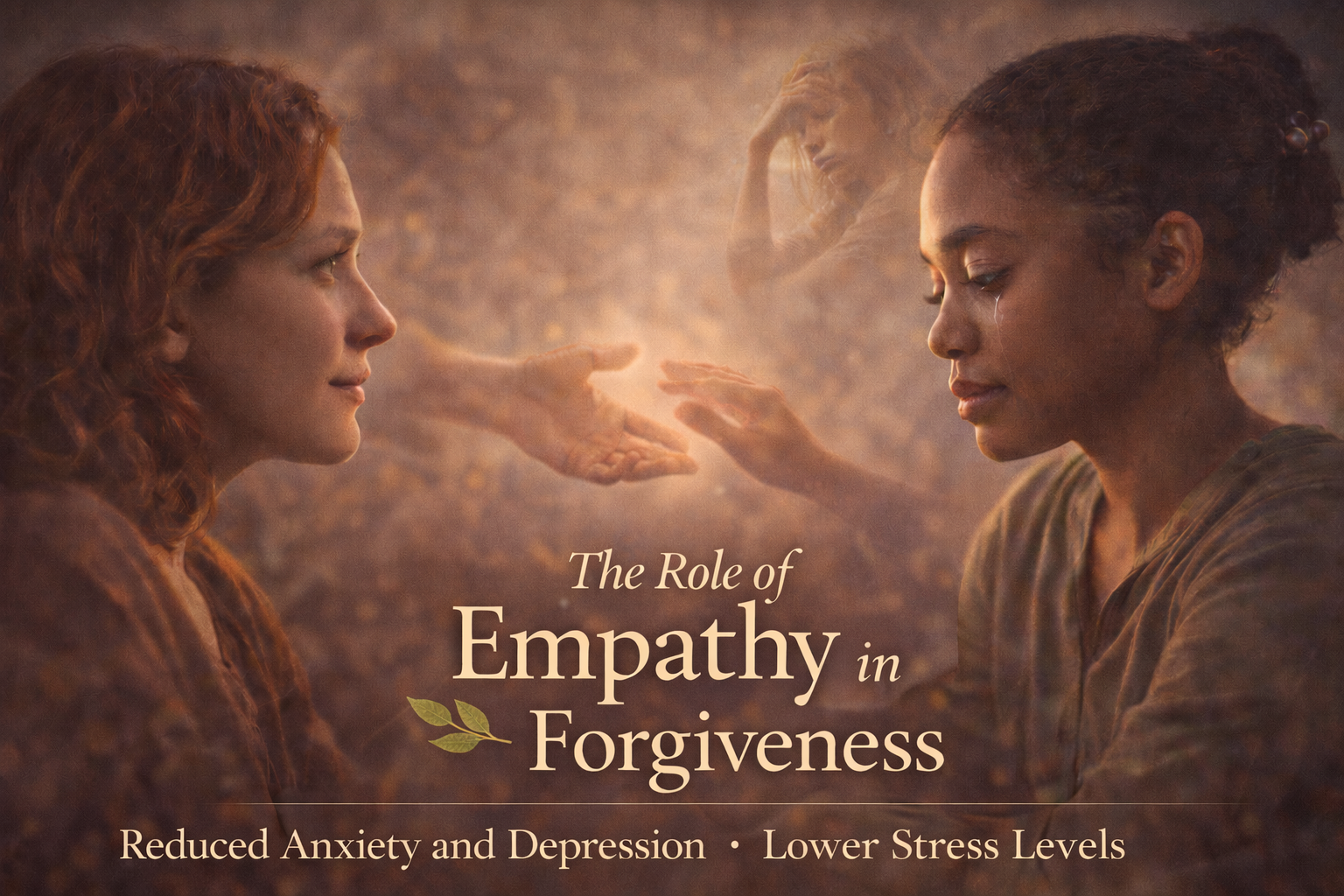
One of the most studied components of forgiveness is empathy.
When people are able to see the humanity in the person who hurt them — even while condemning the behaviour — anger tends to soften.
Empathy does not mean:
- Saying it was okay
- Taking responsibility for their actions
- Blaming yourself
It means recognizing that hurt people often hurt people.
Research shows that guided empathy exercises can significantly increase forgiveness outcomes. But this only works when the person feels emotionally safe enough to try.
Empathy is powerful — but timing matters.
Self-Forgiveness and Mental Health
Psychology doesn’t just study forgiving others. It also studies self-forgiveness.
And this is big.
Chronic guilt and shame are strongly linked to depression and anxiety. When people struggle to forgive themselves, they often stay stuck in self-punishment loops.
Healthy self-forgiveness involves:
- Taking responsibility
- Making amends when possible
- Releasing excessive self-condemnation
Research shows that self-forgiveness reduces shame while maintaining accountability.
It’s not about excusing yourself. It’s about not imprisoning yourself.
Common Myths That Research Disproves
Let’s clear up a few misconceptions.
Myth 1: Forgiveness Means Forgetting
Memory doesn’t disappear. What changes is the emotional charge attached to it.
Myth 2: Forgiveness Is Weak
In studies, people who forgive often demonstrate greater emotional regulation and resilience. That’s strength.
Myth 3: Forgiveness Helps the Offender More Than the Victim
Research overwhelmingly shows that forgiveness benefits the forgiver’s mental and physical health.
The primary shift happens inside you.
Myth 4: Time Heals All Wounds
Time alone doesn’t heal resentment. Active processing does.
What Forgiveness Does to Your Identity
One subtle but powerful research finding is this:
When people forgive, they often shift from a “victim identity” to a “survivor” or “thriver” identity.
The offence stops defining the entire narrative of their life.
That doesn’t mean denying injustice. It means reclaiming your power.
You are no longer just the person who was hurt. You are the person who chose how to respond.
That’s emotional freedom.
What Forgiveness Does NOT Require
Psychology is very clear about this.
Forgiveness does not require:
- Forgetting
- Excusing
- Trusting immediately
- Reconciling
- Removing consequences
- Denying anger
In fact, suppressing anger too quickly can backfire. Emotional avoidance is not forgiveness.
Forgiveness is about transforming resentment — not pretending it never existed.
Practical Ways to Begin (Based on Research)
If you’re curious about practicing forgiveness, here are a few research-supported approaches:
- Write a Letter (You Don’t Have to Send It)
Express the hurt fully. Then write about what it would mean to release the resentment.
Letter-writing exercises are widely used in forgiveness interventions.
- Separate the Person From the Behaviour
Try phrasing it this way:
“I condemn what you did. I release my grip on revenge.”
That distinction helps reduce emotional intensity.
- Limit Rumination
When you catch yourself replaying the offence, gently redirect your thoughts. Rumination fuels resentment.
- Work With a Therapist
Especially for deeper wounds, structured forgiveness therapy can be incredibly effective.
The Bigger Picture: Why Emotional Freedom Matters
Holding onto resentment can feel protective. Sometimes it feels like the only justice available.
But research suggests something important:
Unforgiveness often chains the injured person to the injury.
Forgiveness doesn’t erase what happened. It changes your relationship to it.
Instead of carrying the weight daily, you set it down.
Instead of reliving it, you remember it with perspective.
Instead of being defined by it, you integrate it.
That’s emotional freedom.
A Gentle Closing Thought
If forgiveness feels far away right now, that’s okay.
Research doesn’t demand instant grace. It recognizes that forgiveness is a process — often gradual, sometimes uneven.
Emotional freedom isn’t about pretending the wound wasn’t deep. It’s about choosing not to let it control the rest of your life.
And science increasingly agrees with something many traditions have long suggested:
Forgiveness is not primarily a gift you give someone else.
It’s a gift you give yourself.
Thank you for Reading our Article on “Understanding Forgiveness: What Research Says About Emotional Freedom”
Please Click Here to Return to our Home Page