
Health Benefits of Learning to Forgive
Forgiveness is one of those words that sounds simple, but can feel incredibly hard in real life. When someone hurts us, disappoints us, or breaks our trust, holding on to anger can feel justified—even protective.
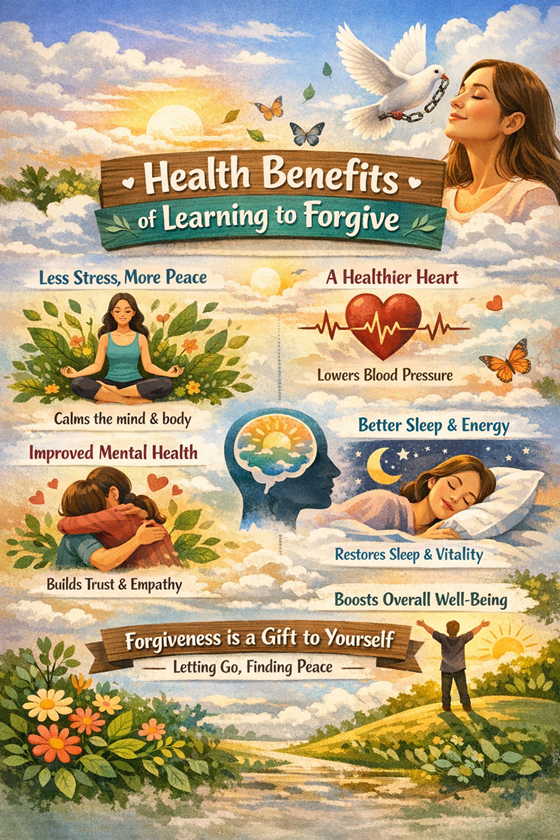 But while resentment may feel powerful in the moment, it often takes a quiet toll on our health over time. Learning to forgive isn’t about excusing bad behaviour or pretending nothing happened. It’s about freeing yourself from the emotional weight that keeps you stuck. And as it turns out, forgiveness comes with some surprisingly powerful health benefits.
Less Stress, More Peace
One of the biggest benefits of forgiveness is stress reduction. Holding on to anger keeps your body in a constant state of tension. Your heart rate increases, your muscles tighten, and stress hormones like cortisol stay elevated. Over time, this chronic stress can wear down your immune system and leave you feeling drained and on edge.
Forgiveness helps calm that internal alarm system. When you let go of resentment, your body gets the signal that it’s safe to relax. People who practice forgiveness often report feeling lighter, calmer, and more at ease. Less stress doesn’t just feel good—it supports better sleep, improved digestion, and overall resilience.
A Healthier Heart
Anger and bitterness don’t just live in your mind—they affect your heart, too. Research has shown that unresolved anger can contribute to high blood pressure and increased risk of heart disease. When you’re constantly replaying hurtful events, your cardiovascular system stays under strain.
Forgiveness helps counteract that. By reducing anger and emotional tension, forgiveness can lead to lower blood pressure and improved heart health. In a very real sense, forgiving others can be an act of kindness toward your own heart.
Improved Mental Health
Forgiveness is closely linked to better mental well-being. When we hold grudges, we often stay mentally tied to painful moments from the past. This can fuel anxiety, depression, and feelings of helplessness. It’s exhausting to carry emotional baggage day after day.
Letting go doesn’t mean forgetting—it means choosing not to let the pain control your present. People who practice forgiveness tend to experience fewer symptoms of depression and anxiety. They also report higher levels of life satisfaction, optimism, and emotional balance. Forgiveness creates space for healing, growth, and self-compassion.
Better Sleep and More Energy
If you’ve ever lost sleep replaying an argument or betrayal in your head, you already know how closely forgiveness and rest are connected. Anger and rumination can keep your mind racing long after your body is tired.
Forgiveness helps quiet those late-night mental loops. When you stop reliving old wounds, your mind can finally rest. Better sleep leads to better focus, stronger immunity, and more energy throughout the day. Many people are surprised by how much lighter and more energized they feel once they stop carrying old resentments.
Stronger Relationships
Forgiveness doesn’t just benefit your inner world—it also improves your relationships. When resentment builds up, it can spill over into how you communicate, trust, and connect with others. Even unrelated relationships can suffer when unresolved anger is always simmering in the background.
Learning to forgive helps you set healthier emotional boundaries and communicate more openly. It allows room for empathy, understanding, and deeper connection—whether with others or with yourself. Even when reconciliation isn’t possible, forgiveness helps you move forward without emotional chains.
Forgiveness Is a Gift to Yourself
Perhaps the most important thing to remember is that forgiveness is not about letting someone “off the hook.” It’s about releasing yourself from the ongoing pain of what happened. You don’t have to rush it, force it, or pretend it’s easy. Forgiveness is often a process—one that unfolds gradually, with patience and self-kindness.
In choosing forgiveness, you’re choosing peace over resentment, healing over hurt, and health over emotional exhaustion. And while the past may not change, your relationship with it can. In that shift, your body and mind finally get the chance to rest, recover, and thrive.
Thank you for reading our “Health Benefits of Learning to Forgive” Article. Please Click Here to Return to Home Page